Table of Contents
A Complete guide to Abstract Photography
If you’re just starting out in photography, abstract work is one of the best ways to train your eye. It breaks a lot of the usual rules. There’s no need for a recognisable subject, a perfect horizon or a pretty location. You can photograph anything that catches your attention and turn it into something that’s purely yours.
That freedom is exactly why it’s so useful for beginners. Instead of worrying about whether you’ve got the “right” shot, you start noticing light, colour and shape, and those are the things that make every kind of photo better.
What is abstract photography?
Abstract photography is a way of making images that express an idea, mood or feeling through visual elements like line, shape, colour and texture, rather than showing a subject in a realistic, recognisable way. The point isn’t “this is a leaf” or “this is a building.” It’s the pattern, the curve or the colour that you found in it.
By moving past the usual way of showing things, abstract photography reveals details we normally walk straight past: the grain in old wood, the ripples in a puddle, the way light breaks through a glass of water.
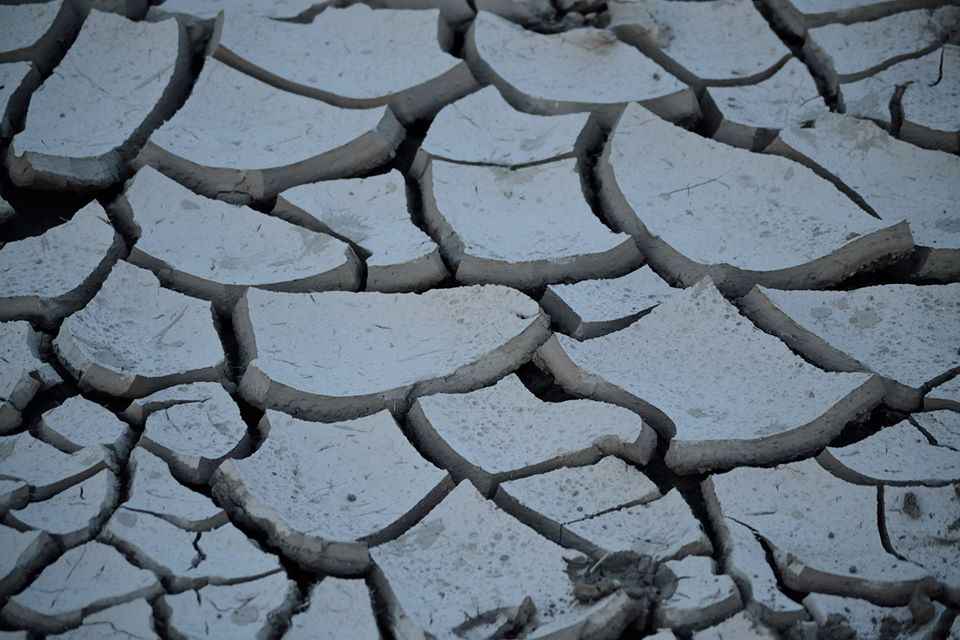
[Image: A complete guide to abstract photography]
Abstract photography tips for beginners
1. Start with ordinary objects
You don’t need to travel anywhere to start. Some of the best abstract photos come from things you see every day and never really look at.
I started with the trees in my backyard. Bark, branches crossing against the sky, light coming through the leaves. Every time I went out, I found a new way of seeing the same few trees, and that’s really the whole skill.
Try it yourself. Pick one random object at home, like a candle, a fork, a cushion or a glass of water, and give yourself 15 minutes to photograph it in as many unusual ways as you can. Get closer, tilt the camera, shoot from underneath. Once you get used to seeing everyday things outside their normal context, you’ll start spotting abstract images everywhere you go.
2. Use design elements to your advantage
In abstract photography, the elements of design are the subject. Line, shape, form, texture, pattern and colour all change how someone reads and feels your photo.
- Lines and curves guide the eye through the frame. A sweeping curve feels calm, while sharp diagonals feel energetic.
- Patterns are satisfying to look at. Repeated tiles, stacked chairs, rows of windows. Breaking a pattern with one odd element makes it even stronger.
- Texture makes people almost want to touch the picture: peeling paint, rusty metal, frost on glass.
- Colour sets the mood on its own. Try filling the whole frame with just one or two colours.
Here’s a fun idea: post the abstract shot, then reveal a zoomed-out photo of what it actually was. People love guessing, and it shows how much you can find in the ordinary.
3. Get close with a macro approach
Moving in closer is one of the easiest ways to make something abstract. When you fill the frame with a tiny detail, the object stops being recognisable and becomes pure shape and texture.
You can start by zooming in, but most zoom lenses only bring you so close. To really magnify small details, use your camera’s macro mode, or invest in a proper macro lens that can show tiny subjects at life size or bigger. Cheaper options like extension tubes or a clip-on macro lens for your phone work surprisingly well too.
Good subjects to start with: water droplets on a leaf, the inside of a flower, the weave of fabric, soap bubbles, or the edge of a coin.
4. Shoot through something
Putting something between your lens and the subject is a quick way to get strange, beautiful results. Think of it as a homemade filter.
- Coloured filters or gels add a wash of colour in camera, so you don’t have to add it later in editing.
- Frosted or textured glass softens and breaks up shapes.
- A glass of water bends and flips whatever is behind it.
- A rainy window or a wet car mirror turns lights and colours into soft, distorted blobs.
- Plastic wrap, a prism or a crystal held near the lens can add flares and rainbow streaks.
Don’t be afraid to experiment. Grab anything see-through from around the house and see what it does to the picture.
5. Play with light
Light can completely change the same object. Move your light source, change its direction or adjust how bright it is, and you’ll get a different photo every time.
- Spotlighting a small area pulls all the attention to it and makes it the focal point.
- Side light from a lamp or window rakes across the surface and brings out texture through shadows.
- Soft, even light is less dramatic, but it lets people wander around the whole image instead of fixing on one spot.
- Backlight puts the light behind your subject. Shine it through leaves, fabric or coloured glass to make them glow, or keep the subject dark for a bold silhouette.
A torch or your phone’s flashlight in a dark room is all you need to start experimenting.
6. Look for shapes, not subjects
This is the mindset shift that makes everything click. Abstract photography isn’t about what something is. It’s about the lines, forms, colours, textures, shadows and highlights it’s made of.
So let your imagination wander a little. The sky isn’t full of clouds; it’s full of soft colourful blobs. A building isn’t windows and balconies; it’s the same geometric shape repeating over and over. A staircase is a set of zig-zag lines.
Once you see the world that way, arrange those shapes and colours in your frame so they balance and work together, regardless of what the object actually is.
Quick starter settings
There are no fixed rules in abstract photography, but these are easy places to begin:
| What you’re shooting | Try this |
|---|---|
| Close-up textures and details | f/8, ISO 100–400, tripod if the light is low |
| Soft, dreamy colour | Wide aperture like f/2.8 and focus on one tiny point |
| Light trails and motion blur | 1/4s to 2s shutter, then move or twist the camera during the exposure |
| Patterns on buildings | f/8–f/11, shoot straight on so the lines stay parallel |
On a phone, tap to focus on the detail you want, lower the brightness a little to keep colours rich, and try portrait mode for a blurred background.
Final thoughts
Abstract photography is less about the camera and more about how you look at things. Start with what’s around you, slow down, get closer and ask yourself what shapes, colours and light you can see, instead of what the object is. The more you practise, the more you’ll find abstract photos hiding in plain sight, and that sharper eye will improve every other kind of photography you do.